Biennial Cypher Summit Creates Space for Intergenerational Dialogue
February 25, 2026

Photo by Miguel Moya
From cyphers to conversations, the event cultivates authentic dialogue between Hip Hop’s past, present, and future.
By Jana F. Brown
Bridging the gap between street culture and academia has long been a goal of USC Kaufman faculty member Tiffany Bong, whose own introduction to dance came through watching a Hip Hop performance in middle school.
In the decades since Bong’s creative awakening, she’s thrown herself into that world. And, for the last eight years, she’s brought her passion and knowledge of street dance to her teaching role at Kaufman, where she’s an assistant professor of practice, focusing on Hip Hop, community engagement, and dance pedagogy.
From March 6 to 7, Bong will host the fifth Cypher Summit at the Kaufman International Dance Center. The two-day biennial gathering of workshops, performances, and dialogue brings together multiple generations of artists, dancers, educators, and scholars to explore how Hip Hop’s culture can exist within school settings.
“When I started the Cypher Summit, it was to address a fundamental question,” explains Bong. “How do Hip Hop and street dance live authentically within academic structures?”

Among the Summit’s multiple components are panel discussions, which offer women from all ages of Hip Hop a chance to share their stories; sisterhood cyphers, described by Bong as “live dance circles where participants don’t know the music beforehand, but create spontaneous collaborative movement conversation” by playing off one another; and live music partnerships that include students from USC’s Thornton School of Music.
“What distinguishes Cypher Summit is its embodied and responsive format,” Bong explains. “It intentionally breaks the mold of a traditional conference. It’s a lived experience…and we co-create that with intercultural reverence. Panels evolve into cyphers. Scholarship meets practice. Intergenerational dialogue unfolds not only through conversation, but through movement.”
Bong’s motivations for founding the Summit were intended to be proactive in answering the founding question rather than letting it be answered. In addition to convening the Hip Hop community, the Cypher Summit also invites students to experience authentic cyphers beyond the limited classroom environment and provides opportunities for storytelling, which Bong considers critical to teaching and learning.
Working collaboratively with USC’s Hip Hop faculty, the Summit embodies the communal value system inherent in Hip Hop culture, while creating a blueprint for other institutions to follow.
“We work as a community and we hold on to that value system inherent in Hip Hop and street dance,” Bong explains, noting that the Summit fills a crucial gap in terms of how Hip Hop education evolves, ensuring the community has a voice in shaping its academic future.

Bong’s own approach adheres to the African proverb “each one teach one,” a charge to impart to others what you know. “That’s a big form of our pedagogy at Kaufman. There’s no learning or living the dance without understanding that you contribute to its story, its evolution, its preservation.”
Fundamental to the Summit is the cypher itself, a sacred ritual through which participants “learn, gather, exchange, and practice.” But it’s more than just dancing, Bong adds. It’s “coded language, where stories and knowledge are exchanged through the body. For students, it’s their chance to participate in a real cypher, where they don’t know who’s going to show up.”
Each Summit centers on a theme in response to the changing needs of the field, Bong explains, ranging from pedagogical approaches to health and injury prevention for street dancers. While anyone is welcome, Bong emphasizes the importance of creating space for women to tell their own stories. Since 2022, Cypher Summit “has intentionally centered on women to illuminate the intergenerational ways we carry lineage, build community, innovate form, and sustain the culture, with the focus shifted to address a persistent gap within Hip Hop culture and scholarship: the study, visibility, and honoring of women in street dance.”
Amaria Stern ’20 served as a program coordinator for the 2020 Cypher Summit. Her personal highlight was facilitating the panel discussion with some of the most influential women in Hip Hop and street dance. Now a graduate student at Pepperdine University studying clinical psychology (and making time for creative work on the side), Stern continues to appreciate the role of the Summit in sharing the stories and legacies of street dance culture.
“Cypher Summit exists because Tiffany recognized a need for the community to be enriched, and I carry that passion with me everywhere,” Stern says. “Every Kaufman street dance professor instilled the same sentiment in me and embodied love for community in their own way.”

This year’s event, branded as the “Cypher Summit Block Party” and co-presented by USC Visions and Voices, will feature street dance seminars with LaTasha Barnes, founder of The Jazz Continuum, and Michele Byrd-McPhee, founder of Ladies of Hip Hop; workshops with Ruthie Fantaye (Hip Hop), B-Boy Summit founder B-Girl Asia One of No Easy Props (breaking), Toyin Sogunro of Nefer Global Movement (house), and Tori Cristi of Whacking Los Angeles (whacking); and performances by Barnes, Versa-Style Street Dance Company, Sonseeahray “Yoda” Jones of Everything Raw; and BFA student Andrea Rodriguez ’26.
There will also be an exhibition dance battle, featuring AryLOVE of Versa-Style Legacy, Crystal “Crysstyle” Jackson Singletary, founding member of THECouncil, and USC Kaufman students, along with an intergenerational panel conversation, including Barnes, B-Girl Asia One, Byrd-McPhee, Jackie “Miss Funk” Lopez (co-founder of Versa-Style Street Dance Company), and street dance icon Damita Jo Freeman (“Soul Train”). The Summit will conclude with a curated “sisterhood cypher,” accompanied by live music and a dance party with DJ TiffSarr.
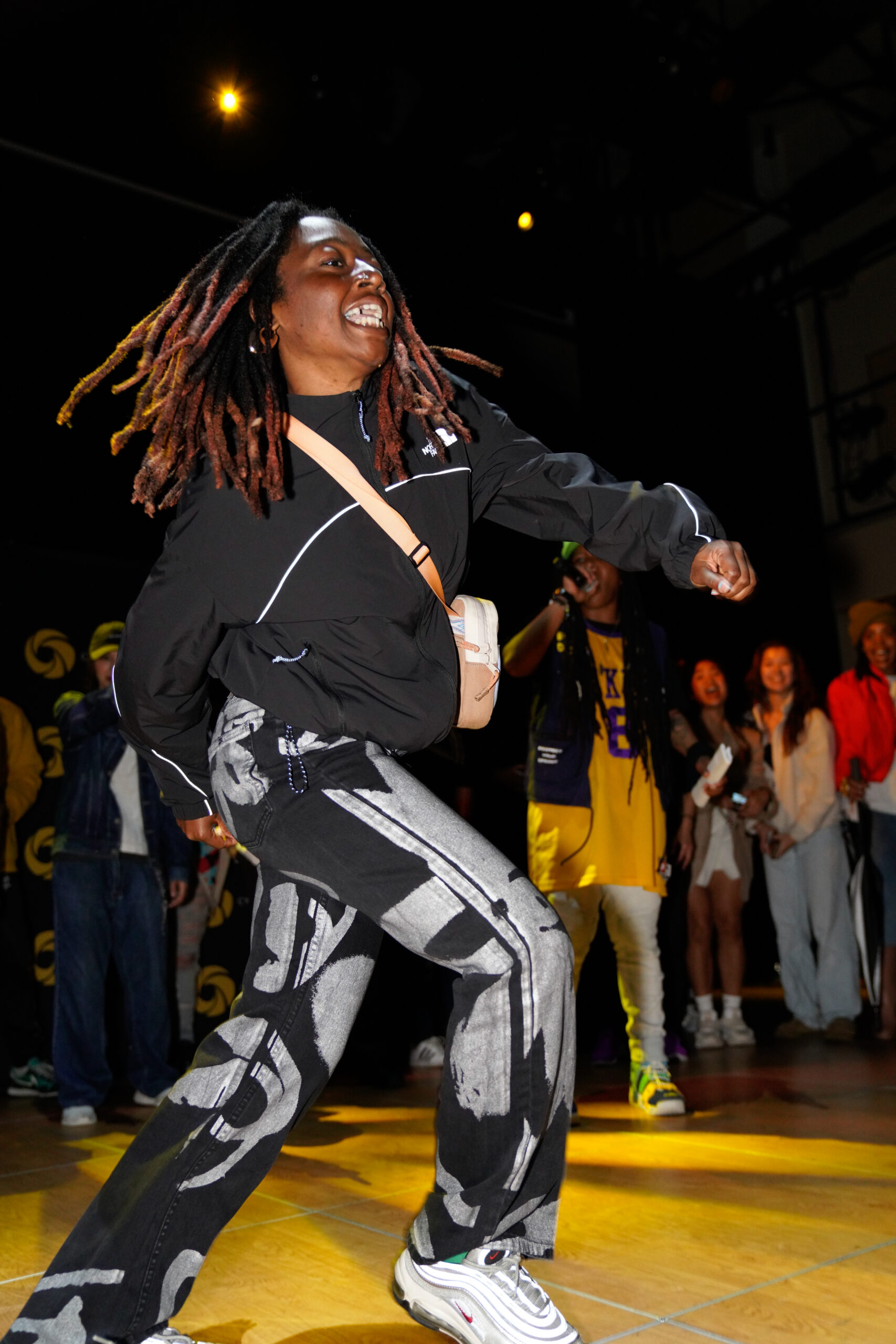
Two particular moments from recent Summits illustrate the transformative power of the gathering. During a sisterhood cypher, accompanied by the USC Thornton band, students created a live soundtrack while intergenerational women demonstrated what a genuine cypher looks like. The magic happened when dancers from different backgrounds, representing krump, breaking, Hip Hop, and house, began weaving their stories together in the cypher.
Another memorable moment came when Damita Jo Freeman — known for her early days as a featured dancer on “Soul Train” and now in her seventies — spontaneously joined a sisterhood cypher, inspiring dozens of others to follow her moves. The moment captured the essence of the Cypher Summit — celebrating dance heritage and showcasing the real-time influence of street dance pioneers.
“The Summit intentionally creates an intergenerational [assembly],” Bong says, “allowing elders to encounter newer generations, and often discovering for the first time how their early passion for the dance they love has impacted dancers decades later.”
To create more of these moments, Bong is working to ensure the Summit’s survival in an era when cultural programs face increasing risks. Her goal is to demonstrate that Hip Hop education is not an accessory, but central to dance education and educational innovation in general. She even aspires to expand the event beyond Kaufman.
“I would love to see Cypher Summit travel to different countries in the future,” Bong shares. “The Summit is about making and allowing space for us to tell our own stories and creating spaces for preserving them. I want to make sure Hip Hop’s rich legacy continues to thrive in academic settings, while maintaining its authentic community roots.”